James Webb Telescope Makes Rare First-Time Discovery of Dry Ice in Butterfly Nebula
Loading more articles...
James Webb Telescope Uncovers Dry Ice in 'Butterfly Nebula': First-Ever Discovery
N
News18•14-03-2026, 23:04
James Webb Telescope Uncovers Dry Ice in 'Butterfly Nebula': First-Ever Discovery
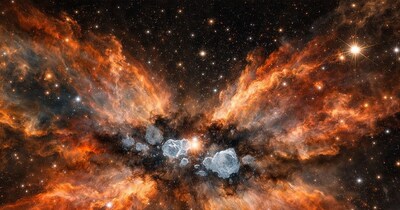
•An international team used the James Webb Space Telescope (JWST) to detect dry ice (solid carbon dioxide) for the first time in a planetary nebula, NGC 6302, also known as the 'Butterfly Nebula'.
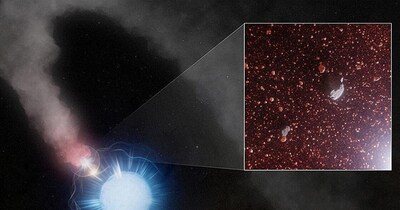
•This discovery is significant because dry ice is typically found in cold, quiet regions, not in the hot, radiation-filled environment of a planetary nebula, posing a puzzle for scientists.
•The Butterfly Nebula, located 3,400 light-years away in Scorpius, previously showed complex organic molecules, indicating active chemical reactions within it.
•JWST's Mid-Infrared Instrument (MIRI) detected gaseous CO2 and subsequently found two solid signatures of dry ice, even more delicate than water ice.
•The finding suggests that ice formation around old, dying stars might differ from that in regions where new stars are born, enhancing our understanding of complex chemical formation in space.