
BJP vs CPC: Contrasting Political Forces Shaping Asia's Future
World
N
News18•13-01-2026, 14:21
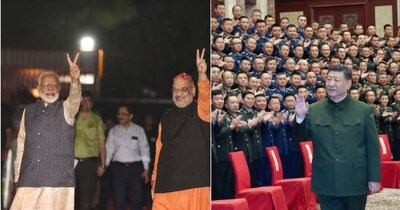
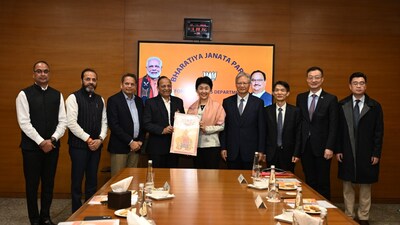
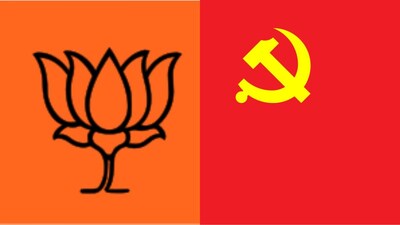
BJP vs CPC: Contrasting Political Forces Shaping Asia's Future
- •India's BJP and China's CPC are powerful political forces with contrasting governance approaches: BJP in a pluralistic democracy, CPC in a centralized one-party system.
- •BJP's ideology is rooted in Hindutva and nationalism, emphasizing cultural identity and economic growth; CPC is based on Marxism-Leninism, prioritizing collective ownership and party supremacy.
- •BJP operates within a multi-party democracy, subject to elections and scrutiny; CPC maintains a one-party authoritarian system, monopolizing power and controlling transitions internally.
- •BJP has tens of millions of members, mobilizing voters in a democratic setting; CPC has over 90 million members, with membership tied to career advancement and state loyalty.
- •BJP focuses on economic liberalization and welfare schemes; CPC emphasizes state-led development and global influence through projects like the Belt and Road Initiative.
Why It Matters: BJP and CPC represent divergent political models, profoundly shaping India and China's national trajectories.
✦
More like this
Loading more articles...