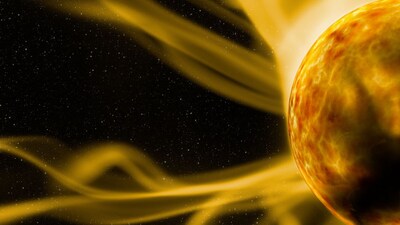
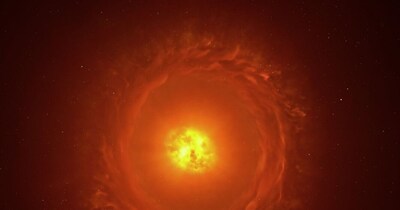
•A violent solar superstorm struck Mars in May 2024, causing unexpected atmospheric reactions and spacecraft glitches.
•Data from ESA's Mars Express and ExoMars Trace Gas Orbiter revealed extreme radiation and a massive surge of electrons in Mars's upper atmosphere, increasing by up to 278%.
•The storm, which also caused record auroras on Earth, led to temporary computer errors on Mars orbiters, highlighting space weather dangers.
•Mars's lack of a global magnetic field makes its atmosphere vulnerable to solar particles, unlike Earth, which is shielded.
•Scientists believe such storms contributed to Mars's atmospheric stripping and water loss, emphasizing the need to understand space weather for future missions.